
Trauma Bay NZ IPA / Brewer’s Select
Why Are We in a Two-Out?
Dave's story
When Trust Becomes Part of the Emergency
I think about it every time I wake up. I’m like, Fuck, get out of bed.
—David Munoa
Every jumper knows that when the reaper knocks, there’s a chance he’ll kick the door in and take you out. If the door stays shut and you’re still breathing, ego drops, and you learn how to barricade that entrance a little better.
Dave’s a technician, a badass snowboarder turned wingsuit/BASE mentor. He’s that precise, calm navigator who lives to ride lines over high-consequence terrain, a space where the gap between perfect and dead can be measured in feet.
So, what happens when an experienced flyer finds himself trapped inside someone else’s mistake?
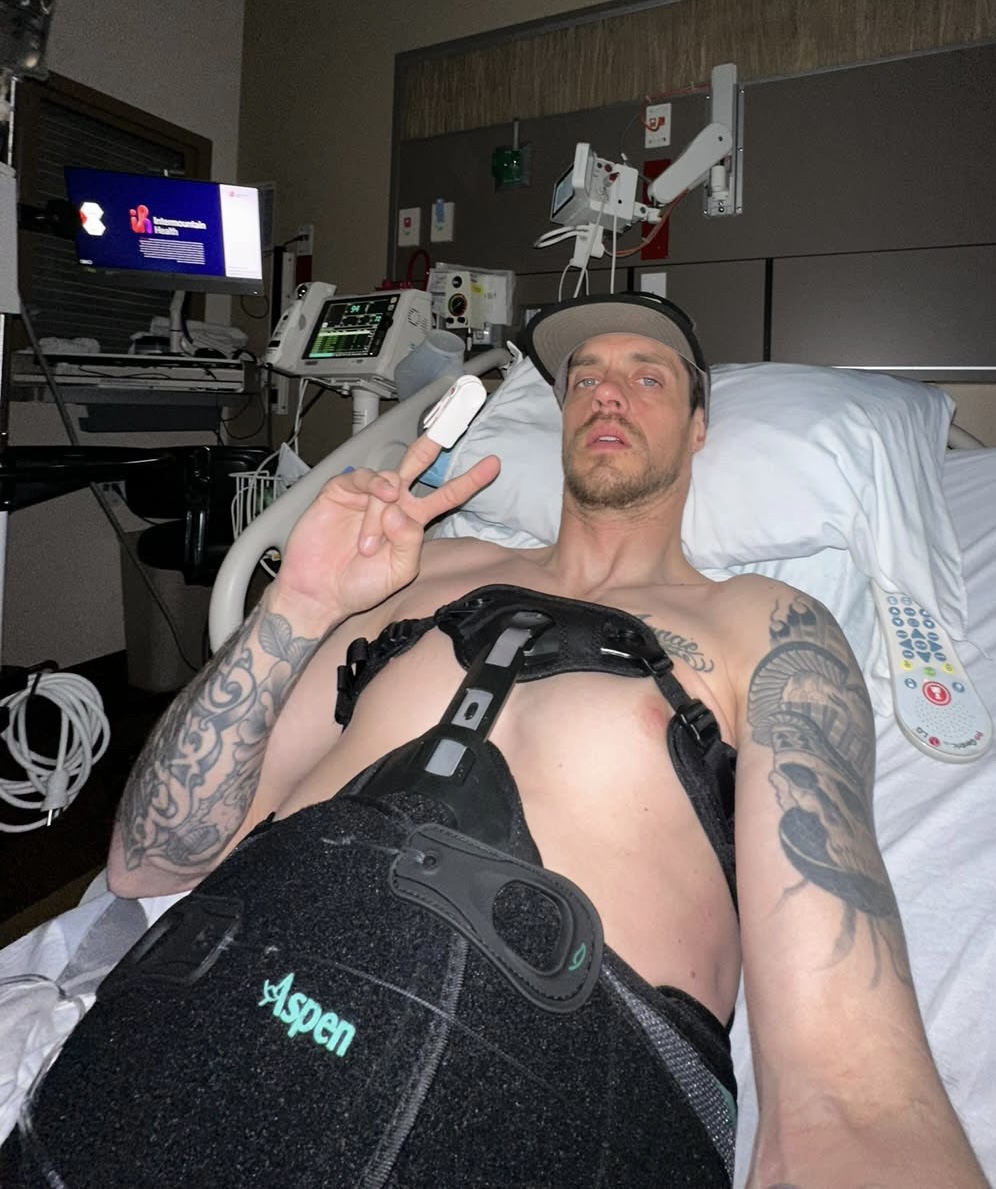
Time slowed, and details stuck: the canopy, the confusion, the ground, the pain, the hospital, the moment medics cut through those brand-new pants. The accident didn’t end when the ambulance arrived; it kept going. It moved into his body, his sleep, his mornings. The report ends with injuries and contributing factors, but the jumper keeps waking up inside the aftermath.
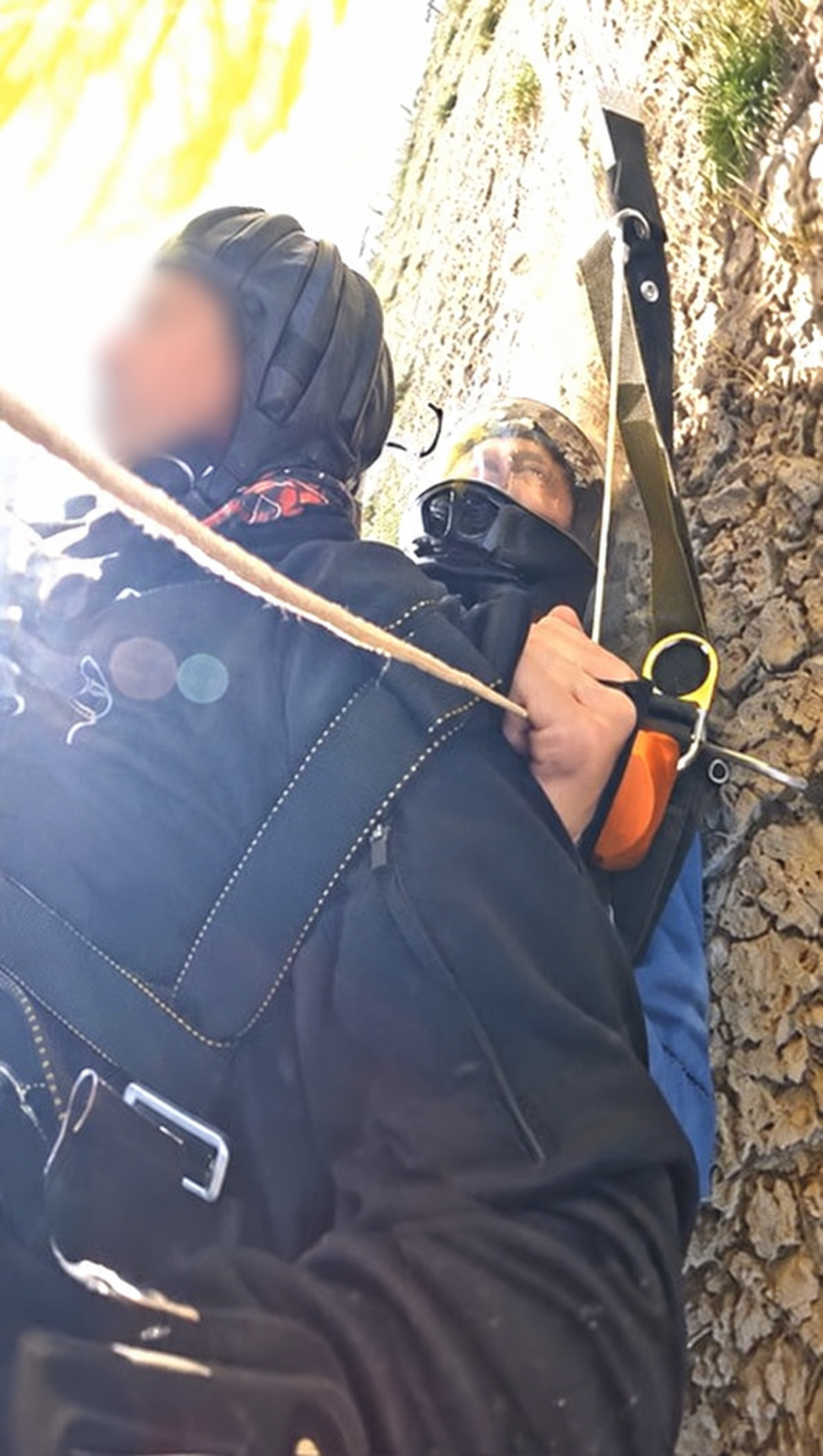
Here’s the incident: The terminal tandem progression jump felt solid. Smooth exit, altitude aware, and a seamless roll through handle checks. Video confirms correct altitude on deployment and perfect body position, but it also shows the instructor pulling the reserve. In an instant, the skydive slid from a managed training jump into a complex emergency.
He had a second of disbelief, not panic, but a kind of stunned calculation. “I remember thinking, why are we in a two-out situation?” The main seemed good, and the reserve was behind and off to the side. First instinct: fly the main, because from what he could see, that was their best canopy. But this wasn’t a solo jump, so he consulted the instructor, who should have carried calm wisdom. Video rolls as a panicked instructor screams, “Cut away your main.”
In skydiving, especially in training, trust is built into the system. You trust the plan, you trust the equipment, you trust the procedures, and, at times, you trust the person in the harness with you. Under canopy, with seconds passing and altitude disappearing, there is no time for debate. You make the best decision you can with the information you have. He took the order and cut away.
After line twists were cleared, there were obvious tension knots. The canopy wasn’t flying forward, and it was surging in an aggressive and uncorrectable way. This is when he remembers estimating injury, broken leg or collarbone, ugly but survivable. A broken back was never on that list.
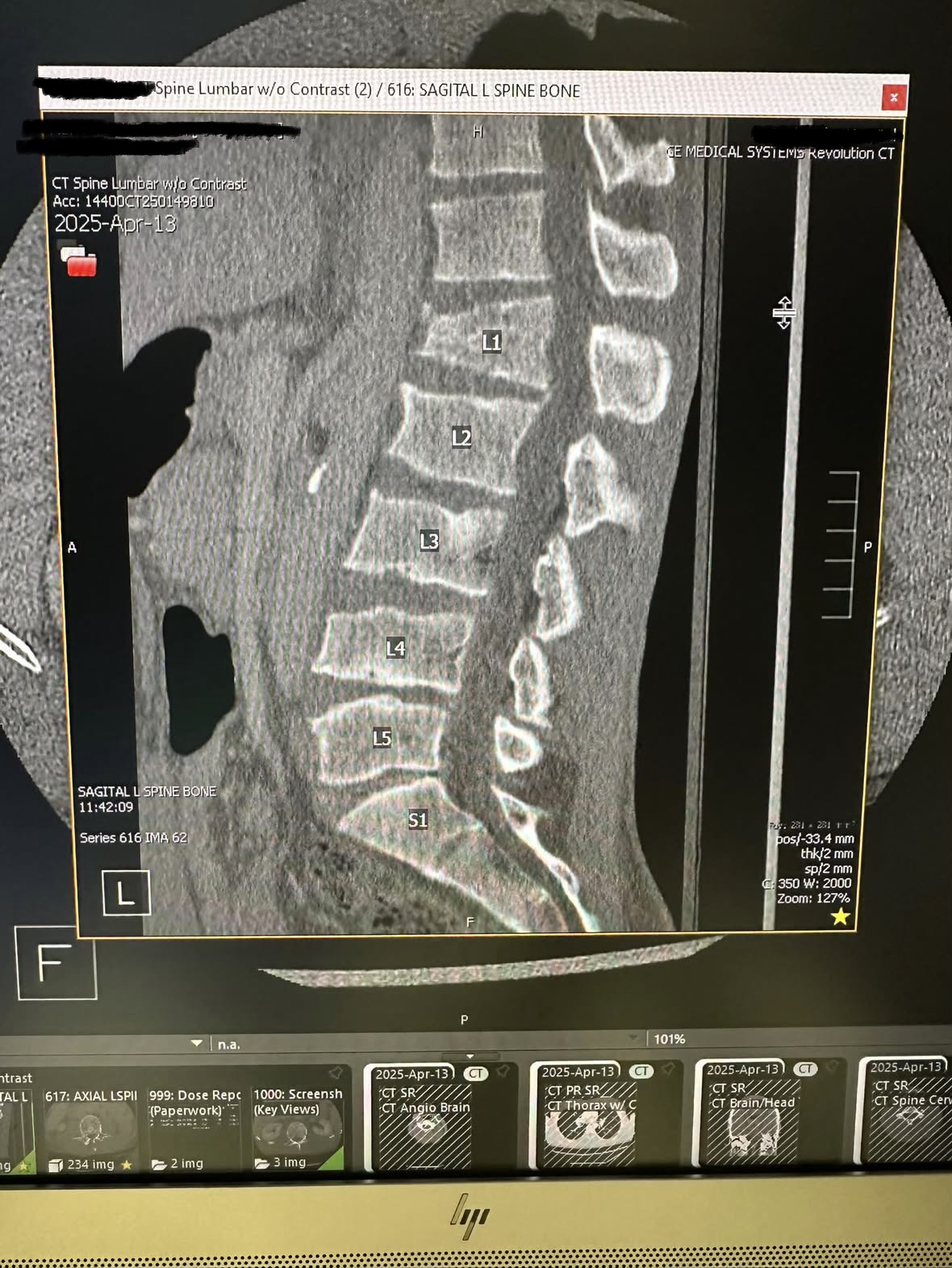
Pain shot up his spine on impact. He remembers trying to breathe and assess his condition as the instructor disconnected and walked away.
What the hell just happened?
The physical injuries were serious, but the mental replay started almost immediately: the deployment, the reserve handle, the two-out, the decision to cut away, the tension knots, the descent. The details became a blur of imaging, medical conversations, pain, and the strange emotional whiplash of being alive but no longer feeling like the same body belonged to him.
For athletes who have movement-based lives, injury steals mental regulation. It takes away the place where your mind gets quiet, some unique space where you trust your body, and that machine moves you in and out of darkness.
So many questions continue to rally:
Why was the reserve pulled?
Why were they in that configuration?
Why was he told to cut away?
Why did the responsibility feel unclear at the exact moment it mattered most?
There are activities that used to feel effortless that now carry pain, hesitation, or loss. But he has returned to the air. That first jump back was hard, but he did it. Incidents like this live in the space between procedure and psychology, between skill and hierarchy, between what we know and what we do when the sky suddenly changes.
We talk a lot in skydiving about emergency procedures. We should. But we also need to talk about the human factors around those procedures: authority gradients, communication, panic, trust, and the pressure to follow someone else’s instruction when the situation is moving too fast to fully understand.
He didn’t walk away from that jump unchanged; no one does after an impact like that. But he did walk away with a sharper understanding of how quickly trust can become part of the emergency, and how important it is, afterward, to tell the truth clearly enough that someone else might learn from it before they are ever in the same position.